



Attached Bench vs. Unattached Bench Picnic Tables: Which Is Better?
Posted by Holly E. on Sep 3rd 2026
Quick Answer: An attached-bench picnic table is generally the better choice for parks, schools, campgrounds, and commercial locations where stability and keeping the benches in place are important. An unattached-bench picnic table is often better for residential use because the benches are easier to move, provide easier access to the table, and can be used separately as additional outdoor seating.
When choosing a picnic table, one of the biggest decisions is whether to select a picnic table with attached or unattached benches. There isn't one design that's best for every situation. How and where you plan to use the table will usually determine the better choice.
The main factors to consider are stability, accessibility, flexibility, legroom, maintenance, and whether the table will be used in a residential or commercial setting.
1. Stability
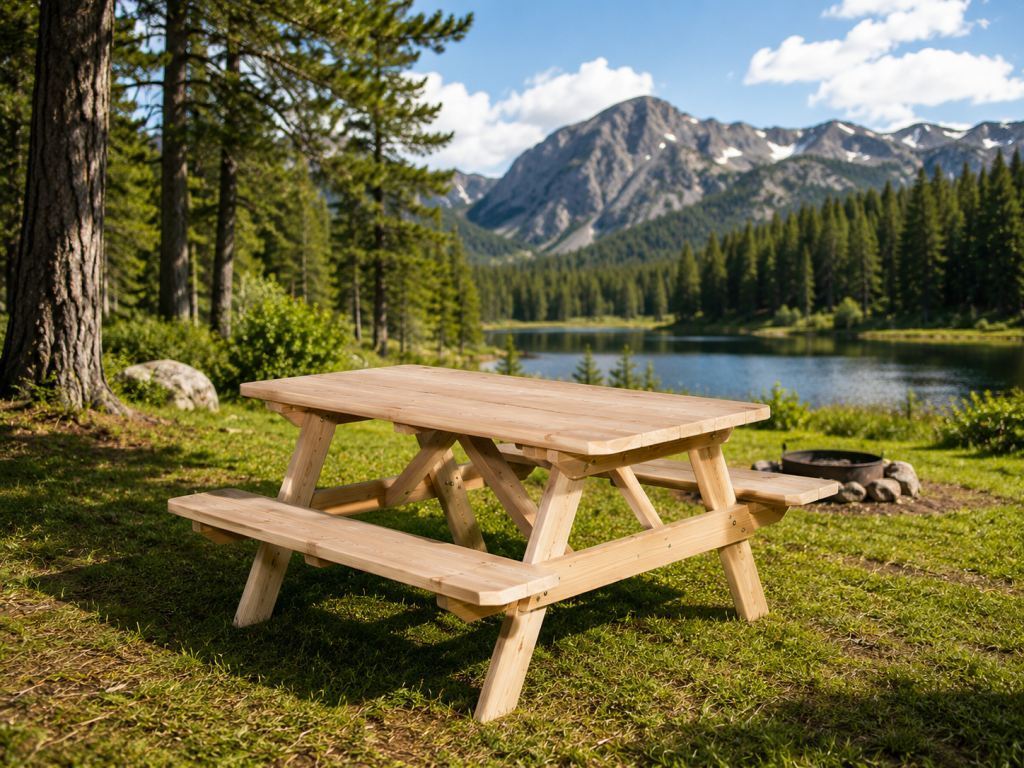
An attached-bench picnic table has the benches connected directly to the table frame, creating one solid structure. Because the benches cannot move independently, they provide excellent stability during use.
This can be especially important in commercial and public settings, where a loose bench could potentially tip if someone sits too close to one end. Keeping the benches securely attached can help reduce this concern.
Attached benches are particularly well suited for:
- Parks and public areas
- Schools and playgrounds
- Campgrounds
- Commercial properties
- High-traffic locations
With an unattached-bench picnic table, the benches can be moved independently. This provides greater flexibility but also means the benches may occasionally need to be repositioned as people move them around.
2. Getting In and Out
One of the biggest advantages of an unattached bench is easier access.
Because the bench isn't connected to the table, you can move it backward before sitting down and position it closer to the table once seated. This can make getting in and out considerably easier, especially for older adults or anyone who has difficulty stepping over the support structure of a traditional attached-bench picnic table.
An attached bench remains at a fixed distance from the tabletop, requiring users to slide into the seating area.
Another important advantage of unattached benches is accessibility. One bench can be moved completely out of the way to provide space at the table for someone using a wheelchair.
3. Flexibility
Flexibility is where the unattached-bench design really stands out.
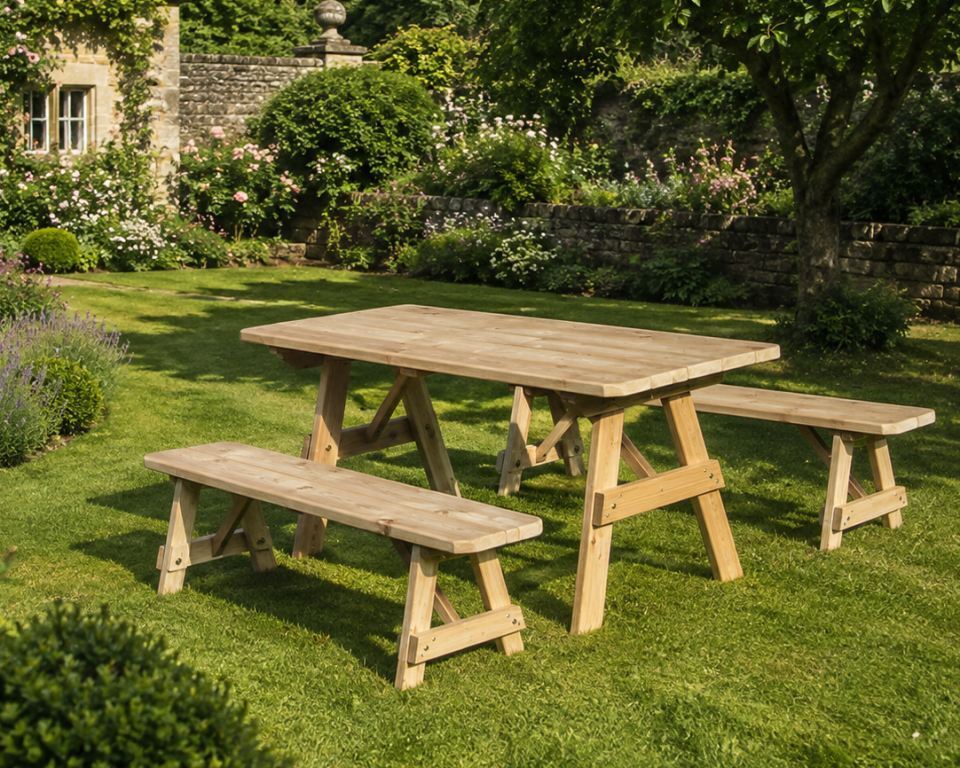
The benches don't have to be used exclusively with the picnic table. They can be moved around your patio, deck, or yard and used as independent outdoor seating.
For example, you might use both benches at the table during a meal and later move one to a fire pit or conversation area when additional seating is needed.
With an attached-bench picnic table, the table and benches always function as one unit.
4. Legroom
Depending on the design of the table, unattached benches can also provide more open space underneath the table.
Traditional attached-bench picnic tables often require additional supports to connect the benches to the table. These supports can limit where you place your feet and legs.
An unattached-bench design eliminates these connecting supports, which can provide more freedom to position your legs comfortably underneath the table.
5. Cleaning Around the Table
Unattached benches can also make cleaning your outdoor area easier. Because the benches can be moved completely away from the table, you have better access when you need to sweep a patio, pressure wash a deck, clean underneath the table, rake leaves, or mow around the furniture.
With an attached-bench picnic table, the entire table and bench structure remains in place, so you have to clean around and underneath the complete unit.
6. Moving the Picnic Table
An attached-bench picnic table can be more difficult to move because you're moving the tabletop and both benches as one large unit.
With unattached benches, you have three separate pieces. The benches can be moved first, followed by the table, making it easier to rearrange your outdoor space or relocate the furniture.
7. Security
Attached benches have a significant advantage in public and commercial environments because they cannot simply be picked up and moved away from the table.
For most residential backyards, this isn't a major consideration. However, for parks, campgrounds, schools, apartment complexes, restaurants, and other public spaces, keeping the benches permanently connected to the table can be an important advantage.
Quick Comparison
| Feature | Attached Benches | Unattached Benches |
|---|---|---|
| Stability | Excellent | Very Good |
| Benches Stay in Position | Yes | No |
| Easy Entry & Exit | Good | Excellent |
| Adjustable Seating Distance | No | Yes |
| Wheelchair Accessibility | More Limited | Better |
| Bench Can Be Used Separately | No | Yes |
| Legroom | Good | Excellent |
| Cleaning Under Table | Good | Easier |
| Moving Furniture | More Difficult | Easier |
| Public/Commercial Use | Excellent | Good |
| Residential Flexibility | Good | Excellent |
Which Picnic Table Should You Choose?
Choose an attached-bench picnic table if you want a traditional picnic table where the table and benches remain together as one unit. This design is particularly well suited for commercial and public locations where stability, security, and keeping the benches in place are priorities.
Choose an unattached-bench picnic table if accessibility and flexibility are more important. The ability to reposition the benches makes it easier to get in and out, adjust your seating distance, accommodate a wheelchair, clean around the table, and use the benches separately when additional seating is needed.
Conclusion
Neither design is better for every situation. The right choice depends largely on how and where the picnic table will be used.
For a commercial or public setting, an attached-bench picnic table often makes the most sense because of its stability and security. For a residential patio, deck, or backyard, an unattached-bench table offers greater flexibility and accessibility.
With unattached benches, you're essentially getting more than just a picnic table—you also have two independent benches that can be moved and used throughout your outdoor living space whenever additional seating is needed.
Frequently Asked Questions
Are attached picnic table benches more stable?
Yes. Because attached benches are connected directly to the picnic table frame, the table and benches form one structure. This prevents the benches from moving independently during normal use.
Are unattached picnic table benches better for older adults?
They can be. A separate bench can be moved backward before sitting down, eliminating the need to step over some of the support structures found on traditional attached-bench picnic tables.
Can a picnic table with unattached benches accommodate a wheelchair?
An unattached bench can be removed from one side of the table to create an open seating position for a wheelchair. The actual table dimensions should still be checked to make sure they meet the user's accessibility needs.
Are unattached benches easier to move?
Yes. Instead of moving the entire picnic table as one unit, the two benches and table can be moved separately.
Can unattached picnic table benches be used separately?
Yes. Since the benches are freestanding, they can be moved away from the picnic table and used as additional seating elsewhere on a patio, deck, or yard.
Have a question about outdoor furniture? We'd love to help. Give us a call at 877-595-8543, send us an email at help@OutdoorFurniturePlus.com, or contact us through our website. Real people answer the phone Monday through Friday from 8:00 a.m. to 4:30 p.m. Eastern.
About the Author
Holly Eddins | Owner of Outdoor Furniture Plus

Holly Eddins has spent her career helping customers and businesses find quality products they can trust. Her journey in the home industry began as a home décor and accessories factory representative, where she developed a passion for understanding products, building relationships, and providing knowledgeable support.
In 2004, Holly founded her first online business bringing her years of industry experience into the emerging world of e-commerce. That experience reinforced something she still believes today: even when customers shop online, they want to know there are real people behind the business who care about helping them make the right decision.
In 2011, Holly and her family expanded into outdoor living by acquiring a group of websites focused on outdoor furniture, garden accessories, and related products. Over time, Outdoor Furniture Plus became the focus as her experience and passion naturally aligned with helping customers create comfortable, beautiful outdoor spaces.
Today, Holly leads the Outdoor Furniture Plus team while remaining personally involved in customer conversations, product research, website development, marketing, and the ongoing relationships with the manufacturers the company represents.
Her approach is simple: provide customers with the information they need to make confident decisions. From detailed product specifications and assembly resources to buying guides and firsthand product knowledge, Holly believes that a well-informed customer is a happy customer.
When she isn't helping customers create outdoor spaces across the country, Holly enjoys spending time outdoors and continuing to learn from the very products and brands that Outdoor Furniture Plus proudly represents.
Note: Above image courtesy of the University of Tennessee at Knoxville when Eddins Marketing Group, LLC (Outdoor Furniture Plus' parent company) was awarded a Rocky Top Business award as the third fastest growing alumni led company in 2023.
