


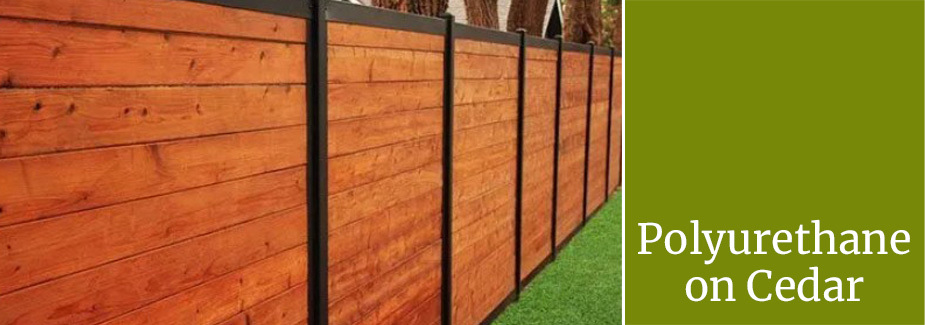
A properly sealed cedar finish breathes with the wood — polyurethane doesn't.
Can You Use Polyurethane on Outdoor Furniture?
No — polyurethane outdoor use is generally discouraged because most formulas aren't made to survive UV exposure, moisture, and temperature swings, especially on cedar. Use a penetrating oil, an exterior stain with UV inhibitors, or a sealer made for cedar instead.
Why Polyurethane Fails Outdoors
When it comes to protecting outdoor furniture — particularly cedar furniture like swing sets and picnic tables — it might seem logical to apply a durable, glossy finish like polyurethane. But most polyurethanes are designed for indoor use, not polyurethane outdoor use. They aren't formulated to withstand UV rays, varying temperatures, or constant moisture, so outdoor elements quickly break down the finish, causing it to crack, peel, and flake.
Even finishes labeled "exterior polyurethane" often degrade faster than alternatives made specifically for outdoor use. Once the seal is compromised — a falling limb, a hairline crack in the wood — water seeps in, gets trapped under the finish, and causes mildew, rot, or discoloration.
Why Cedar Needs to Breathe
Cedar is naturally rot-resistant, with oils that help it repel moisture and insects. It doesn't need a heavy finish to perform well outside. That's why red cedar outdoor furniture doesn't need a heavy finish to perform well outside. Polyurethane furniture finishes form a hard, non-breathable shell, but cedar is a porous, living material that expands and contracts with humidity and temperature. Sealing it with an impermeable coating restricts that natural movement, increasing the risk of cracking and splitting.
Why Refinishing Polyurethane Is a Hassle
Once a polyurethane shell cracks outdoors, you can't simply touch it up — you have to strip it entirely and reapply. Stripping chemicals can damage the wood, and sanding soft cedar has to be done carefully to avoid gouging it. It's labor-intensive and easy to get wrong, which is another reason polyurethane outdoor use tends to disappoint over time.
Better Alternatives to Polyurethane
| Alternative | Why It Works |
|---|---|
| Penetrating oil finishes (tung oil, linseed oil) |
Let the wood breathe while offering water resistance and enhancing the grain. |
| Exterior wood stains with UV inhibitors | Protect against sun damage while keeping a natural look. |
| Clear outdoor sealers made for cedar | Provide protection while flexing with the wood instead of trapping moisture. |
Water-based alternatives are easier to maintain and reapply, and they work with the wood instead of against it. Oil-based alternatives are also easier than polyurethane for outdoor furniture but can be harder to apply and clean up for a first-timer.
For more guidance, see our articles on Oil-Based vs. Water-Based Stains and Types of Stains & Sealers .
Water-based alternatives are easier to maintain and reapply, and they work with the wood instead of against it. Oil-based alternatives are also easier than polyurethane for outdoor furniture but can be harder to apply and clean up for a first-timer.
For more guidance, see our articles on Oil-Based vs. Water-Based Stains and Types of Stains & Sealers .
Water-based alternatives are easier to maintain and reapply, and they work with the wood instead of against it. Oil-based alternatives are also easier than polyurethane for outdoor furniture but can be harder to apply and clean up for a first-timer. For more guidance, see our articles on Oil-Based vs. Water-Based Stains and Types of Stains & Sealers.
Ready to protect your furniture the right way? Shop our full line of outdoor furniture care products, including penetrating oils and exterior sealers.
Frequently Asked Questions
Can you use polyurethane on outdoor furniture?
Generally, no. Most polyurethane is designed for indoor use and isn't formulated to withstand UV rays, moisture, and temperature swings. On outdoor cedar furniture especially, it forms a hard, non-breathable shell that cracks, peels, and traps moisture against the wood, leading to mildew and rot.
What should I use instead of polyurethane on outdoor cedar furniture?
Penetrating oil finishes (like tung oil or linseed oil) let the wood breathe while adding water resistance. Exterior wood stains with UV inhibitors protect against sun damage. Clear outdoor sealers made for cedar offer protection while flexing with the wood.
How often should I reseal outdoor cedar furniture?
Apply the correct sealer for at least the first two years of ownership, then reapply whenever the finish looks like it's wearing thin.
Go Back to our Learning Center Main Page
